This tutorial shows how to quickly test new Temporal worker code using Signadot Sandboxes in Kubernetes without redeploying the full stack. It covers deploying baseline services, routing workflows to sandboxed workers, and explains how context propagation and selective task execution enable safe, isolated testing.
Co-authored by Arjun Iyer and Nimesha Jinarajadasa.
Welcome to the Temporal + Signadot Sandboxes tutorial! In this guide, you’ll learn how to quickly test new versions of Temporal worker code—either in a pull request or during local development—by leveraging a Temporal setup running in a remote Kubernetes cluster. This setup enables you to:
Estimated time to complete: 10-15 minutes
What you’ll accomplish:
Before you begin, ensure you have the following prerequisites set up:
1) Docker Desktop with Kubernetes Enabled
2) kubectl Installed
Install kubectl and ensure it is available in your PATH.
Set your context to the Docker Desktop Kubernetes cluster:
3) Signadot Account and Operator
4) Signadot CLI (Optional, but recommended for sandbox management)
Clone the Signadot examples repository and navigate to the Temporal tutorial directory:
You should see something like the following for the pods:

And this for the services:

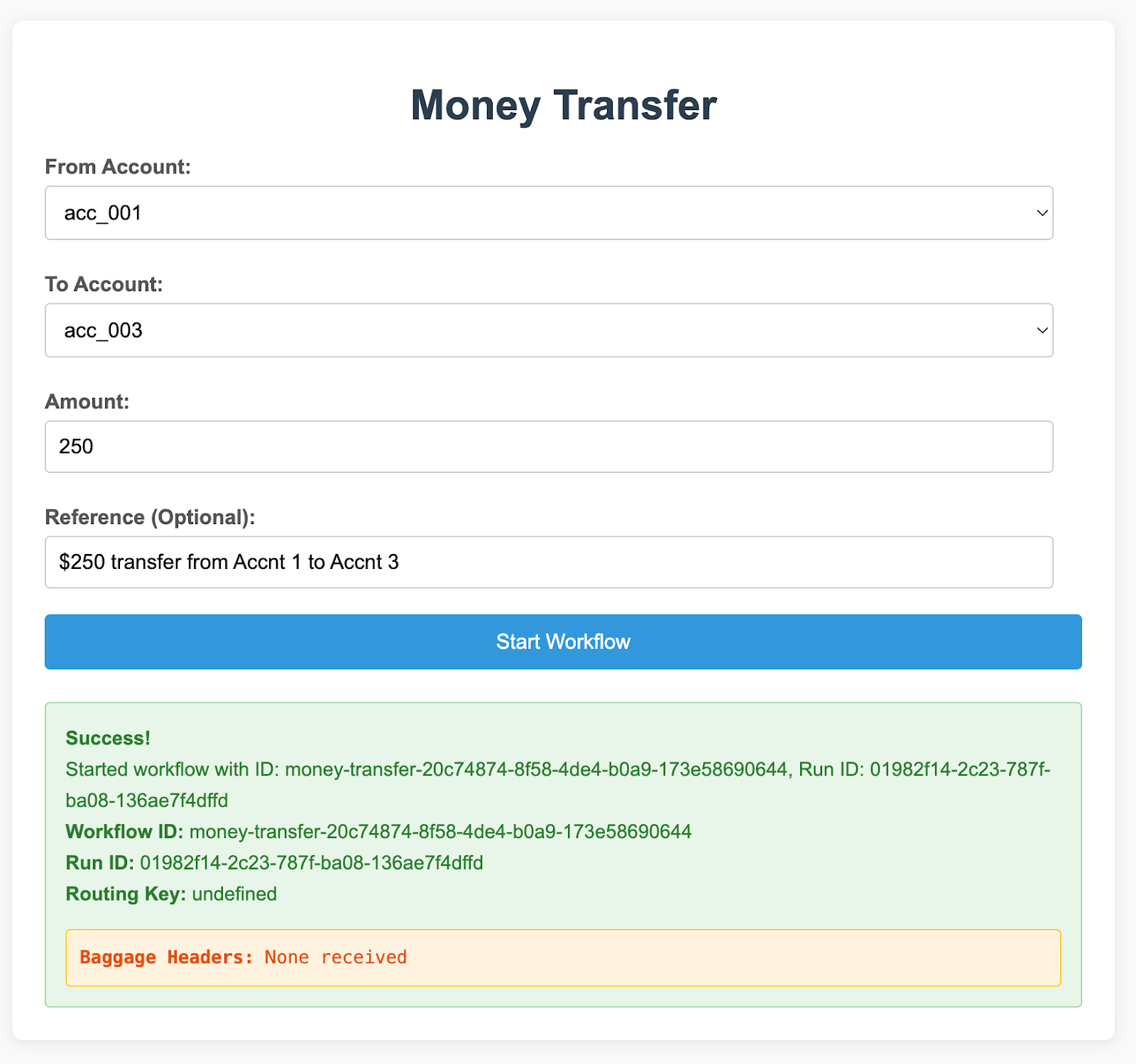
Then visit: http://localhost:8080
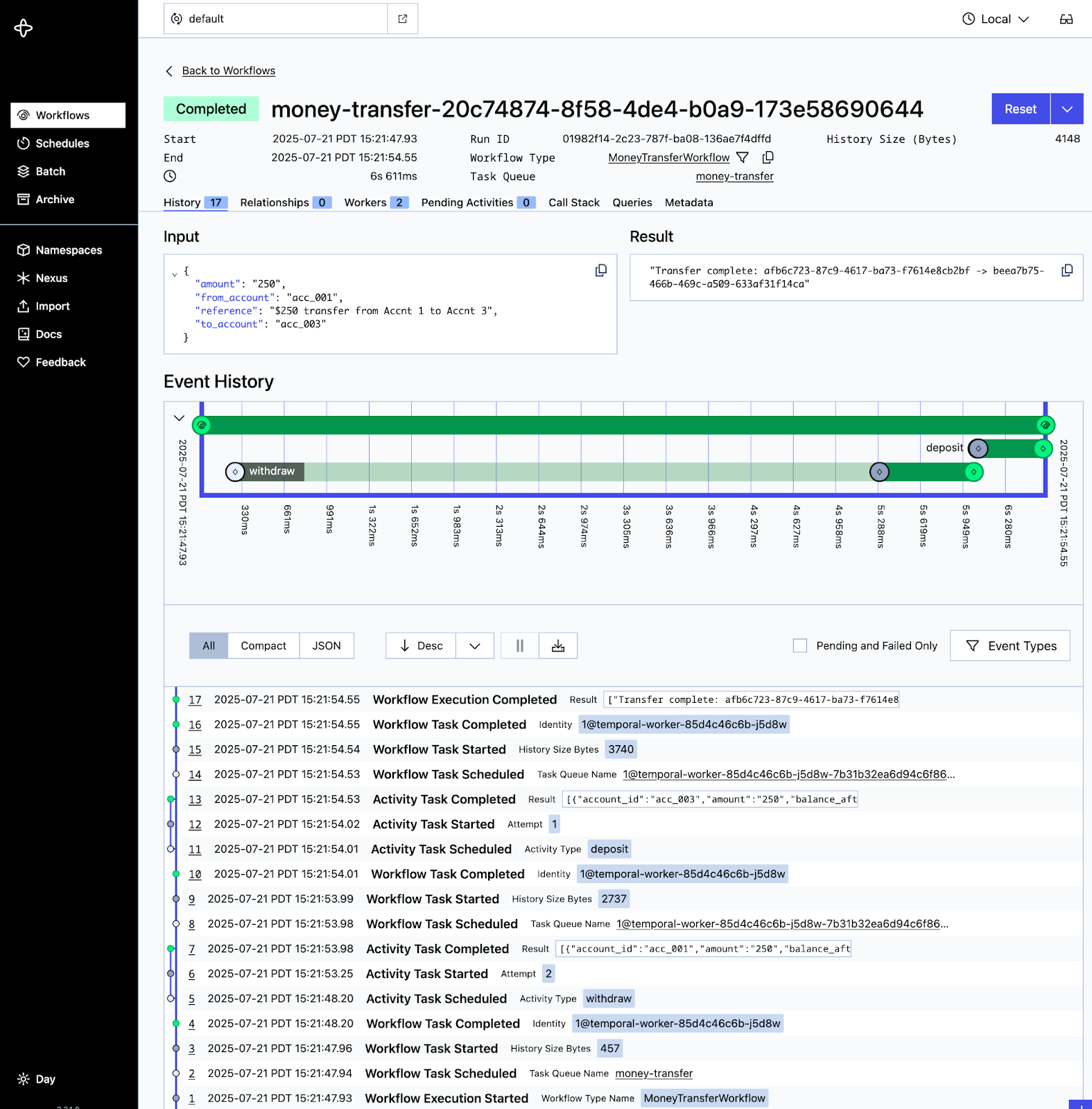
Then visit: http://localhost:8088
You should see something like this in the worker logs:

Use the same image as the baseline (no code changes needed):
Create a sandbox spec (e.g., worker-sandbox.yaml is provided):
Wait for the sandbox to be ready:
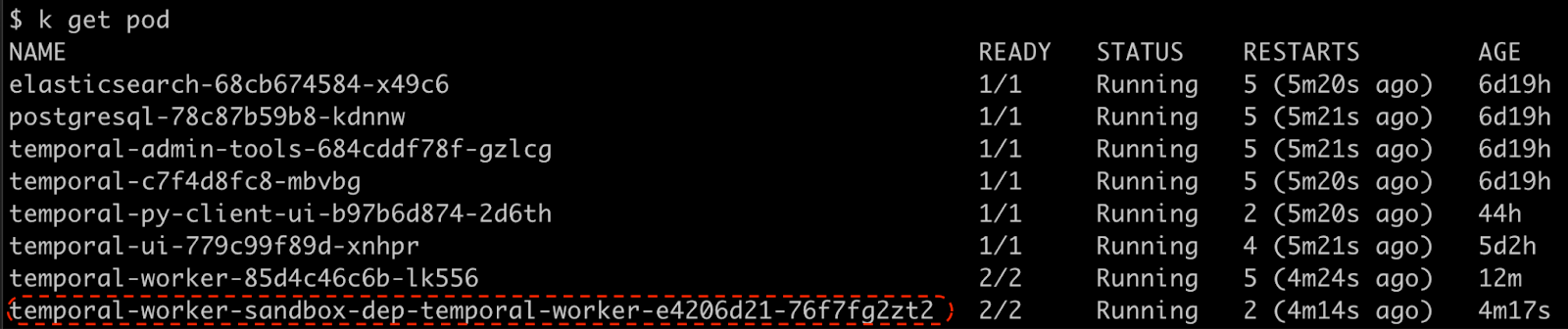
Confirm a new worker pod is running in the temporal namespace.
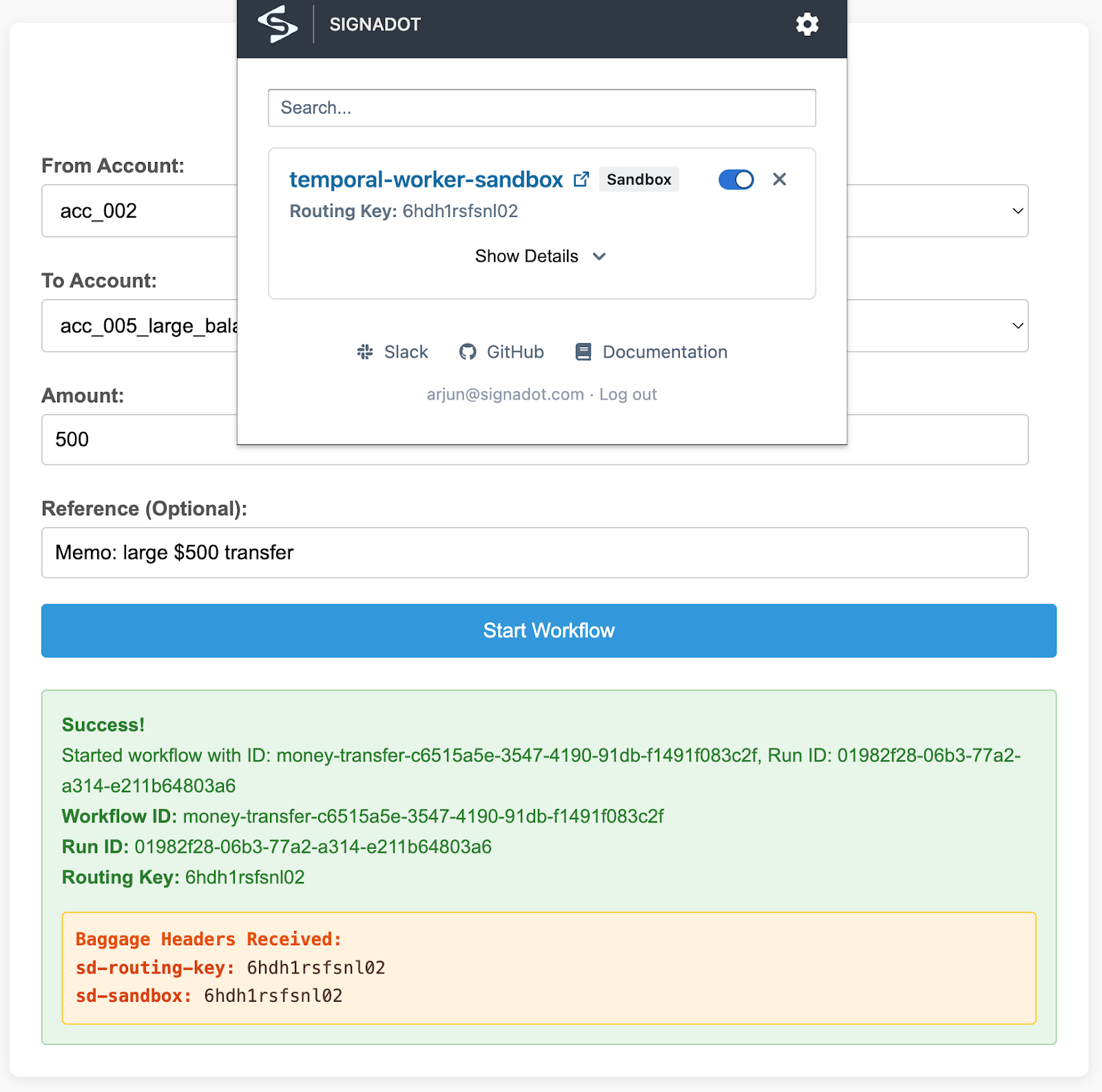
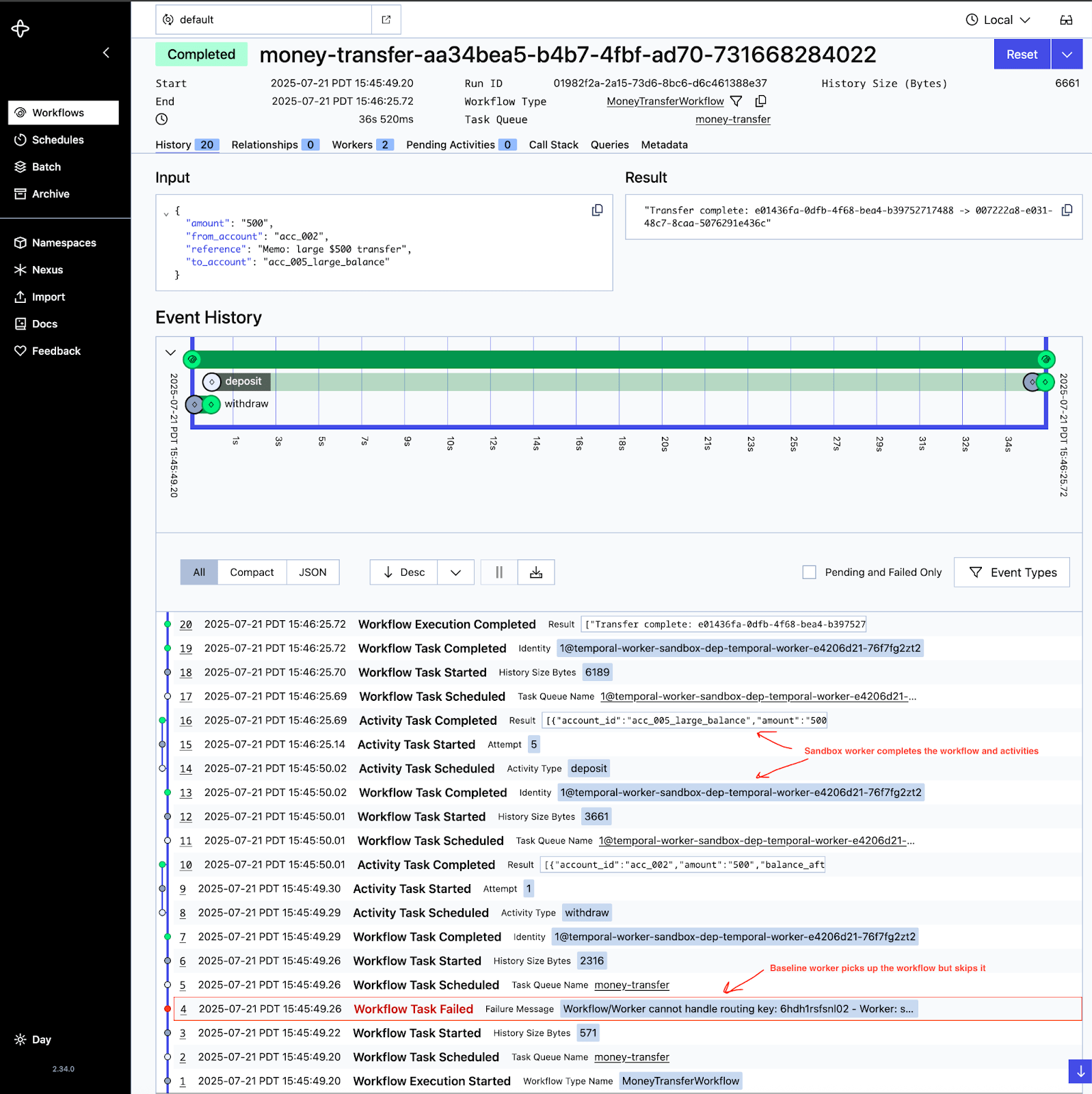
TracingInterceptor to propagate OpenTelemetry baggage (including the Signadot routing key) into the workflow submission task. This baggage is stored in the workflow’s headers in Temporal’s persistent storage.TracingInterceptor is used to extract baggage.temporal_worker/interceptors.py) check the routing key and consult the Signadot routeserver to determine if the worker should process the task.In this tutorial, you learned how to use Temporal and Signadot Sandboxes to rapidly test new worker code in an isolated Kubernetes environment. We demonstrated deploying baseline services, submitting and routing workflows, and leveraging sandboxes for safe, high-fidelity testing without disrupting the baseline environment. This approach enables faster iteration and more reliable integration testing for microservices.
Ready to go further? Check out more tutorials and resources at https://www.signadot.com/docs/overview.
Get the latest updates from Signadot